

- Site Navigation -
 Current location:
PRODUCTS DISCRIPT
PRODUCTS DISCRIPT
Plastic Seedling Nursery Tray
A plastic seedling nursery tray is an essential and widely used tool in agriculture, horticulture, and gardening, designed specifically for the efficient germination of seeds and th......
 Product description
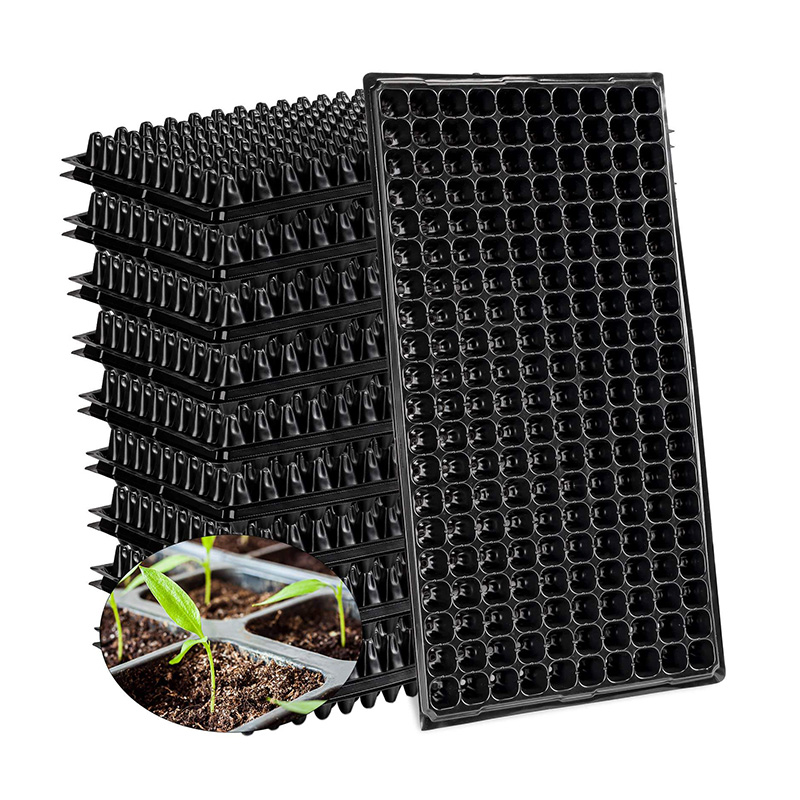
A plastic seedling nursery tray is an essential and widely used tool in agriculture, horticulture, and gardening, designed specifically for the efficient germination of seeds and the early-stage growth of seedlings. It is typically manufactured from durable plastic materials (such as polyethylene, polypropylene, or recycled plastic blends) through injection molding or thermoforming processes, featuring a structured design with multiple individual compartments (known as "cells" or "pots") to house separate seeds or seedlings.
Core Functions
Uniform Seedling Growth: The divided cell structure of the tray ensures each seed or seedling has its own dedicated space, preventing root entanglement between adjacent plants. This allows for consistent access to water, nutrients, and light, resulting in more uniform seedling size, stronger root systems, and reduced competition—critical for high-quality transplants.
Efficient Space Utilization: Compared to traditional open seedbeds or individual pots, plastic nursery trays are compact and stackable (when not in use for growing). They maximize vertical and horizontal space in greenhouses, propagation rooms, or even small indoor areas, enabling growers to nurture a large number of seedlings in a relatively small footprint.
Root Protection & Transplant Success: The tray’s cells help form a "root ball"—a dense mass of roots that surrounds the growing medium within each cell. When transplanting seedlings to fields, gardens, or larger pots, this root ball remains intact, minimizing root damage. Intact roots allow seedlings to quickly adapt to new environments, reducing transplant shock and significantly improving survival rates.
Simplified Management: Trays centralize seedling care, making tasks like watering, fertilizing, and monitoring pest/disease issues more efficient. Water can be applied evenly across the tray (either from the top or via bottom irrigation), and nutrients can be distributed uniformly through the growing medium. Additionally, the tray’s portability makes it easy to move seedlings to adjust light, temperature, or humidity conditions.
Key Characteristics
Durability & Reusability: High-quality plastic nursery trays are resistant to impacts, bending, and degradation from water, fertilizers, and mild chemicals. They can withstand repeated use across multiple growing seasons (often 3–5 years or more) with proper care, making them a cost-effective alternative to disposable paper or peat pots.
Drainage & Aeration: Most trays feature small drainage holes at the bottom of each cell. These holes prevent waterlogging by allowing excess water to escape, which is vital for avoiding root rot—a common issue in seedling growth. The holes also promote air circulation around the root zone, supporting healthy root respiration.
Versatility in Design: Trays come in a wide range of sizes, cell counts, and cell shapes to suit different needs:
Cell count: From small trays with 6–12 large cells (for growing larger seedlings like tomatoes or peppers) to large trays with 200+ tiny cells (for small seedlings like lettuce, herbs, or flowers).
Cell shape: Square, rectangular, or round cells, with some designs featuring tapered sides to facilitate easy seedling removal during transplanting.
Size: Compact trays (for indoor gardening) to large, industrial-grade trays (for commercial greenhouse operations).
Lightweight & Portable: Even when filled with growing medium and seedlings, plastic trays are lightweight, making them easy to carry, stack (for storage), or transport between growing areas and transplant sites.
Common Application Scenarios
Commercial Agriculture & Horticulture: Large-scale farms and nurseries rely on plastic seedling trays to produce uniform transplants for cash crops (e.g., tomatoes, cucumbers, cabbage), ornamental flowers, and fruit trees. The trays streamline propagation processes, ensuring consistent crop quality and timely planting.
Home Gardening & Urban Farming: For home gardeners, small-scale trays (with 12–72 cells) are ideal for starting seeds indoors (e.g., on windowsills or under grow lights) before transplanting to outdoor gardens or raised beds. They are also widely used in urban farms, community gardens, and balcony gardening due to their space-saving design.
Research & Education: Agricultural research institutions, botanic gardens, and schools use plastic nursery trays for experiments on seed germination, plant growth, and pest resistance. The trays’ uniform cell structure ensures controlled conditions, making it easier to compare results across different plant varieties or treatments.
Landscaping & Reforestation: In landscaping projects, trays are used to grow ornamental shrubs, grasses, or groundcover plants. For reforestation efforts, specialized trays (often with deeper cells) nurture tree seedlings (e.g., pine, oak, or native species) until they are strong enough to be planted in natural habitats.

 2025-09-02

Cangzhou Guiyuanhe Hardware Manufacturing Co., Ltd
Copyright © 2025-2026 http://www.guiyuanhe.com. All Rights Reserved Cangzhou Guiyuanhe Hardware Manufacturing Co., Ltd