

- Site Navigation -
 Current location:
PRODUCTS DISCRIPT
PRODUCTS DISCRIPT
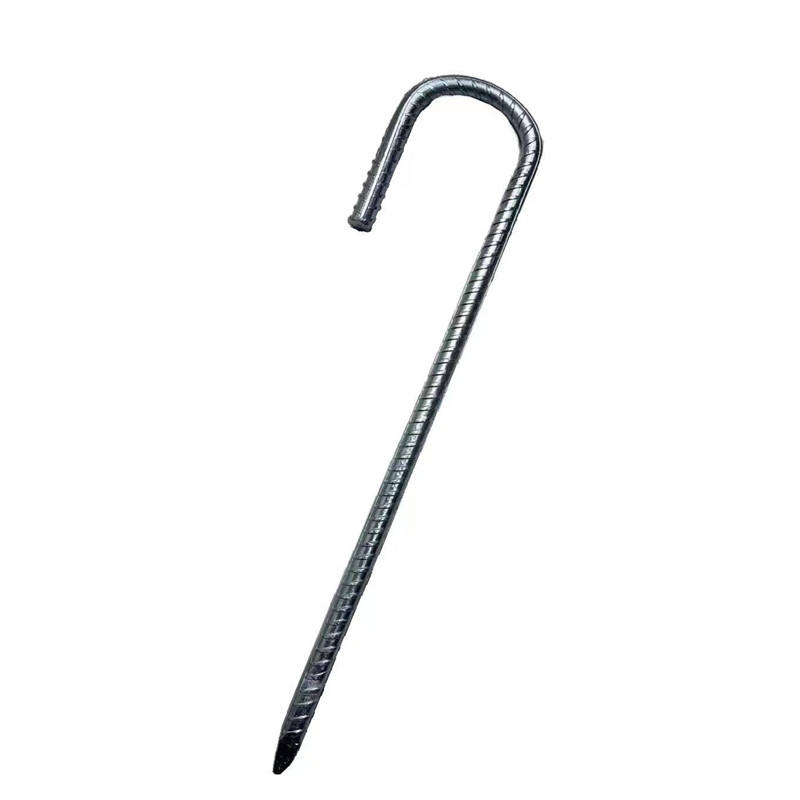
Ground anchor
A ground anchor is a foundational device designed to secure structures,equipment,or objects to the ground by transferring tensile,compressive,or lateral forces into the soil or subs......
 Product description
A ground anchor is a foundational device designed to secure structures,equipment,or objects to the ground by transferring tensile,compressive,or lateral forces into the soil or substrate.It prevents displacement caused by external forces like wind,water,weight,or seismic activity,making it essential in construction,landscaping,agriculture,and outdoor installations.Unlike surface-level fasteners,ground anchors penetrate the ground(shallowly or deeply)to leverage the soil’s bearing capacity,ensuring long-term stability.
Core Purposes and Applications
Ground anchors serve diverse functions across industries,with key uses including:
Structural Stability:Securing temporary or permanent structures such as tents,canopies,carports,sheds,and modular buildings.They resist uplift from strong winds or downward pressure from the structure’s weight,preventing tipping or shifting.
Landscaping and Outdoor Projects:Anchoring items like garden pergolas,retaining walls,fence posts,and decorative features.They counteract soil erosion or lateral pressure that could push walls outward or loosen posts.
Agricultural and Horticultural Use:Stabilizing greenhouse frames,crop supports(e.g.,trellises),irrigation systems,or animal enclosures.In greenhouses,for example,they prevent frame movement during storms or when supporting heavy plant growth.
Construction and Civil Engineering:Reinforcing deep foundations for buildings,bridges,or retaining walls.Deep-set anchors(e.g.,helical or grouted types)transfer structural loads to stable soil layers below weak topsoil,reducing settlement risks.
Recreation and Temporary Installations:Securing camping gear(tents,awnings),playground equipment(swings,slides),or event structures(stages,barriers).They ensure safety by withstanding user activity or weather-related forces.
Common Types and Their Characteristics
Ground anchors vary in design to suit different soil types(clay,sand,loam,rock)and load requirements.Key types include:
Spiral/Ground Screw Anchors:Featuring a helical(screw-like)design,these anchors are twisted into the ground manually or with a power tool.The helixes distribute force across a large soil area,providing strong holding power.They are ideal for soft to medium soils,easy to install(no digging required),and reusable.Common in small-scale projects like securing sheds or fence posts.
Pound-In/Drive Anchors:Simple,rod-shaped anchors with pointed ends and flanges or barbs.They are hammered or driven into the ground,where the barbs grip the soil to resist pulling.Suitable for shallow installations in firm soil(e.g.,anchoring tent stakes or lightweight garden structures)but may fail in loose sand or wet clay.
Auger Anchors:Similar to spiral anchors but with a single,large-diameter auger blade.They are drilled into the ground using an auger tool,creating a tight fit with the soil.Auger anchors excel in medium to dense soils and are often used for heavier loads,such as securing large tents or irrigation pipes.
Grouted Anchors:Consist of a steel rod or cable inserted into a pre-drilled hole,then filled with grout(a cement-like mixture)to bond the anchor to the soil or rock.Once cured,the grout creates a strong,permanent connection,making these anchors suitable for heavy structural applications(e.g.,bridge foundations or retaining walls)in rocky or unstable soils.
Deadman Anchors:A traditional,low-tech type where a heavy object(e.g.,a concrete block,metal plate,or buried log)is placed underground,and a cable/rope from the structure is attached to it.The object’s weight and soil friction resist pulling.Used for temporary projects or in areas where digging deep is impractical(e.g.,anchoring a temporary fence in rocky ground).
Key Factors for Selection and Installation
To ensure a ground anchor performs effectively,consider these critical factors:
Soil Type:Soil density and composition directly impact holding power.Spiral or auger anchors work best in soft-to-medium soils;grouted anchors are needed for rock or loose sand.Conduct a simple soil test(e.g.,checking if soil clumps or drains quickly)to choose the right type.
Load Requirements:Calculate the maximum force the anchor must resist(e.g.,wind uplift on a greenhouse,weight of a retaining wall).Light loads(tents,small sheds)may use pound-in or spiral anchors;heavy loads(buildings,bridges)require grouted or deep helical anchors.
Installation Depth:Deeper anchors access more stable soil and provide greater holding power.Shallow anchors(6-12 inches)suit lightweight items;deep anchors(several feet or more)are for structural projects.Follow manufacturer guidelines for depth based on soil and load.
Environmental Conditions:Wet or waterlogged soil reduces friction,so choose corrosion-resistant anchors(stainless steel,galvanized metal)and ensure proper drainage.Coastal areas may require anchors resistant to saltwater corrosion.
Maintenance Tips
Inspect Regularly:Check anchors for signs of loosening,corrosion,or damage(e.g.,bent rods,broken barbs)every 3-6 months,especially after severe weather(storms,heavy rain).
Prevent Corrosion:For metal anchors,apply a rust-resistant coating(e.g.,paint,lubricant)if the original finish wears off.Replace severely corroded anchors to avoid failure.
Reinforce if Needed:If an anchor feels loose(e.g.,a fence post wobbles),add extra soil around the base or install a secondary anchor for additional support.
Remove Carefully:For reusable anchors(spiral,pound-in),use appropriate tools(e.g.,a wrench for spiral anchors,a puller for drive anchors)to avoid bending or breaking them during removal.
 2025-09-02
Cangzhou Guiyuanhe Hardware Manufacturing Co., Ltd
Copyright © 2025-2026 http://www.guiyuanhe.com. All Rights Reserved Cangzhou Guiyuanhe Hardware Manufacturing Co., Ltd